

Guides
Chatbot, Telegram bot, or AI agent: how we choose for a business
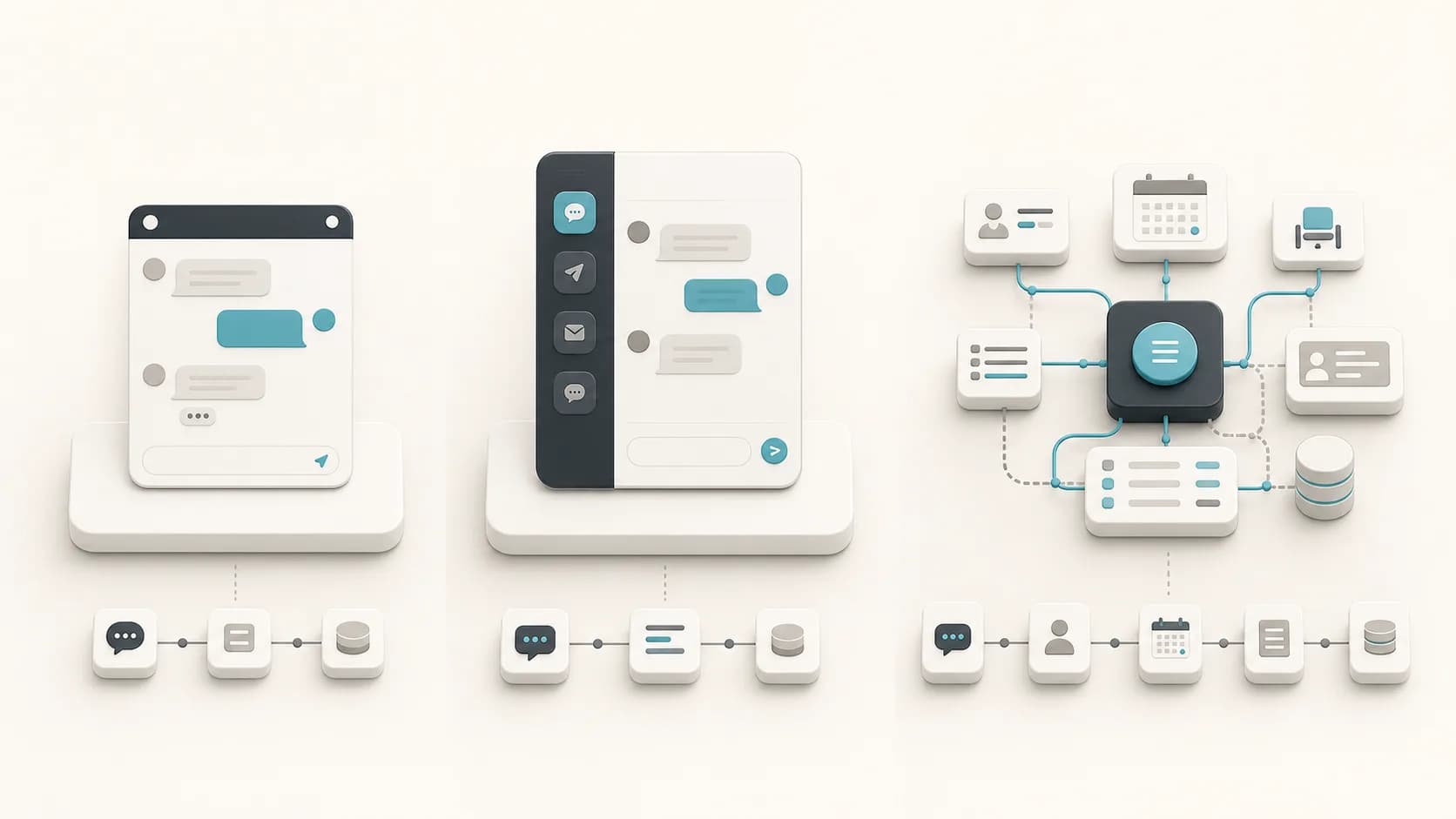
We first map the channel, the customer's next step, and where data is recorded. Only then do we choose a chatbot, Telegram bot, or connected AI agent.
Sources
Guides
We first map the channel, the customer's next step, and where data is recorded. Only then do we choose a chatbot, Telegram bot, or connected AI agent.
A button-based chatbot works well when branches are known in advance: choose a service, open an instruction, or leave contact details. It is predictable and often cheaper than a complex solution, but it handles free-form wording poorly and becomes difficult to maintain as exceptions grow.
A standalone Telegram bot fits a process that stays inside one channel. If a staff member still copies the result into a CRM, calendar, or spreadsheet, the workflow bottleneck remains.
A Chota AI agent uses business materials, supports free-form dialogue, and can connect the conversation to a next action such as lead qualification, booking, or structured handoff into a working system.
That does not make the agent an autonomous employee without boundaries. Financial, medical, legal, and unusual decisions need a controlled transition to a person.
We choose the smallest sufficient solution. Stable branches point to a scripted bot. One channel with custom logic may call for a Telegram project. Knowledge, free-form dialogue, and actions across several systems are signals to evaluate an AI agent.
A first-hand look at Chota's document workflow: how business materials become agent context, what must be tested, and why a knowledge base does not replace process ownership.
A single status page for voice agents, review intelligence, native CRM, and partnership discussions without presenting plans as released features.