

Product Development
How we launched the Chota knowledge base and where its limits are
We added a knowledge base so Chota can answer from a company's working materials. Below are the design, value, and limits of the solution.
Sources
Product Development
We added a knowledge base so Chota can answer from a company's working materials. Below are the design, value, and limits of the solution.
In early configurations we saw price lists, booking rules, service descriptions, and exceptions placed inside one long instruction. That text is difficult to maintain, and one outdated line can quickly become a wrong answer to a customer.
We therefore separated the agent's behavioural rules from business facts. The instruction defines the role and boundaries, while the knowledge base contains documents the team can update independently.
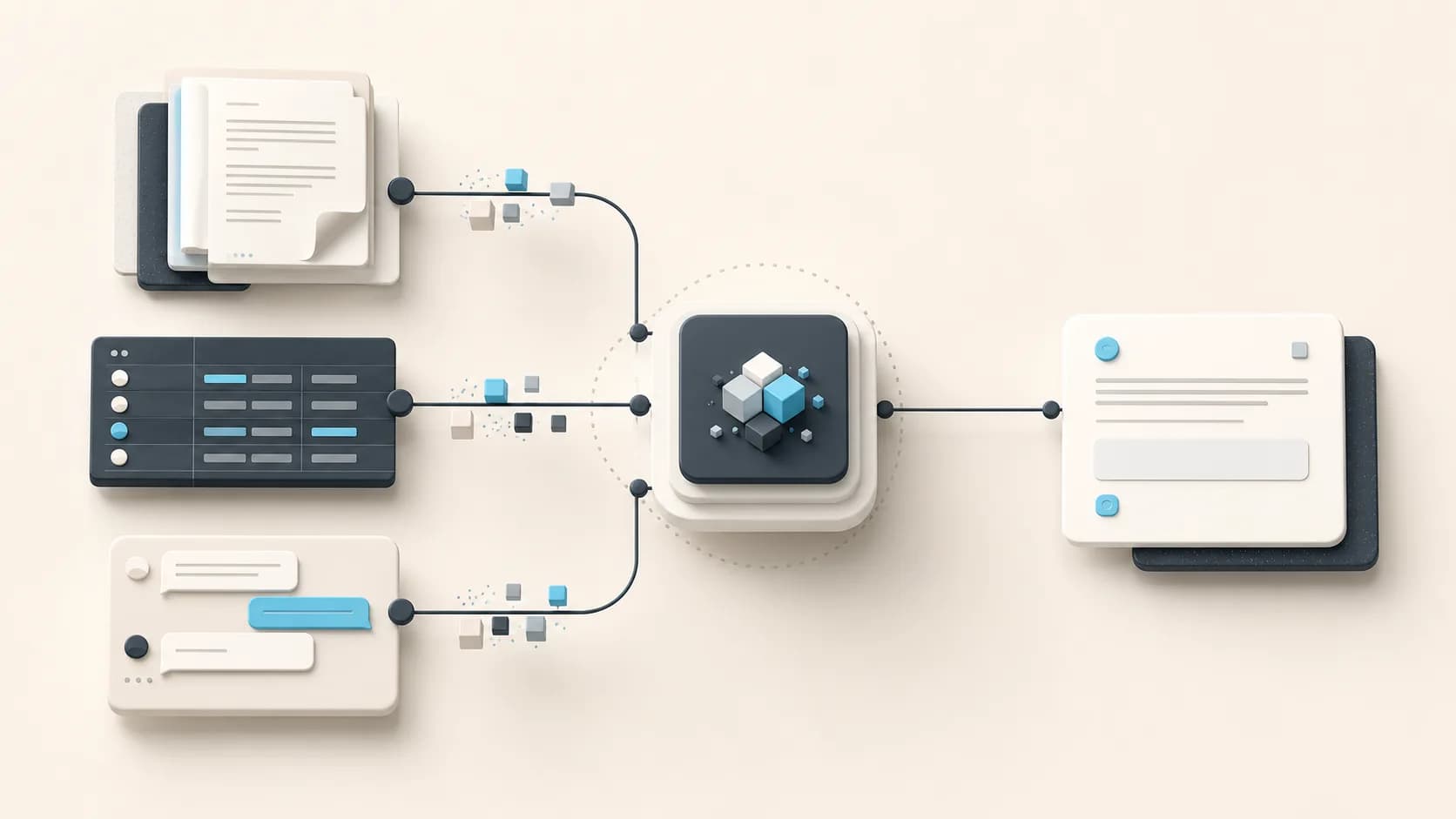
During a conversation, the agent matches the customer's question against available context: knowledge-base materials, connected workflow data, and the current conversation history. It then responds or hands the request over when it lacks a reliable basis.
We do not claim that uploading any PDF automatically creates a faultless consultant. Output quality depends on document structure, fact freshness, configured boundaries, and realistic test questions before the agent is published.
We start with a small document set and real customer questions. Materials are added gradually after the answers are checked, making it easier to find the source of an error and avoid mixing multiple versions of one rule.
Instead of an unverified list of names, we explain the durable process Chota uses to balance task quality, latency, context, and model cost.
A practical comparison across channel, knowledge, actions, human handoff, and integrations without assuming every business needs an AI agent.